

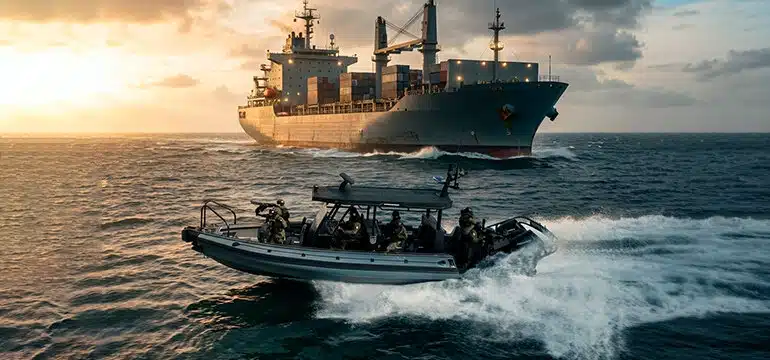
Ship vs Boat: 5 Major Differences You Never Knew About
What Is the Difference Between a Ship and a Boat?
Quick answer: A ship is a large, ocean-going vessel of 500 gross tons (GT) or more, built to international standards like SOLAS with a permanent, certified crew. A boat is smaller generally under 100 feet built for coastal, inland, or recreational use, with simpler construction, casual crewing, and oversight from national maritime authorities.
Introduction
Throughout history, sailors and students have wondered: What makes a ship different from a boat?
There’s no reason to blame people for using these words interchangeably. Both float, both travel on water, both get you where you’re going.
A ship isn’t just bigger than a boat; there’s a lot more to it than that. There’s history, engineering, law, international regulations, and even naval tradition. By the end of this article, you’ll know exactly when to say “ship” and when to say “boat,” and more importantly, why it matters.
Let’s dive in.
Quick Comparison Table: Ship vs Boat
| Feature | Ship | Boat |
| Size | 200ft (60m) or longer | Generally under 100ft (30m) |
| Gross Tonnage | 500 GT or above | Below 500 GT |
| Crew | Large, permanent, STCW-certified | Small, crewed only when in use |
| Navigation Range | Ocean-going, deep-water | Coastal, inland, limited range |
| Propulsion | Multi-engine, dedicated engine room | Single outboard or inboard engine |
| Cargo/Passenger Capacity | Thousands of TEUs or passengers | Limited — recreational or small-scale |
| Regulatory Framework | IMO conventions, SOLAS, MARPOL, MLC 2006 | National maritime authority only |
| Cost to Build | $50 million to over $1 billion | $10,000 to $500,000 |
1. Volume vs. Gross Tonnage

Size is the most obvious difference between a ship and a boat – and for good reason. There is often a staggering difference in scale.
It’s not just length that counts in the maritime world. It is measured in Gross Tonnage (GT), which is the vessel’s total enclosed volume, not just its weight.
Any vessel with a gross tonnage of 500 GT or more is officially classified as a ship under international maritime conventions like SOLAS. Anything below that threshold is considered a boat.
In practical terms,
- Ships are typically 200 feet (60 meters) or longer
- Boats are generally under 100 feet (30 meters).
According to Wikipedia, the Ever Given was a massive 400 meters long and carried 220,000 tons of cargo. A football field’s length isn’t a boat in any sense.
On the other end, a fishing trawler or a harbour ferry — compact, nimble, and operating close to shore — is unmistakably a boat.
Generally, if a vessel has a gross tonnage of 500 or more, it’s a ship.
2. Navigation and operational range

Ships and boats differ fundamentally in their design.
Ships are built for open oceans. With fuel reserves exceeding 5,000 metric tonnes, they can sail for weeks or even months without refueling. On long international voyages, they are equipped with advanced navigation systems, life-saving gear, fire protection, and enough food and water to sustain a large crew.
In contrast, boats are built for calmer, closer waters – lakes, rivers, bays, lagoons, harbours, and coastal areas. They carry limited fuel, food, and resources, so they cannot survive on an ocean crossing for weeks. In terms of engineering, boats cannot sail the open ocean or without fuel for weeks.
3. Command Structure and Crew Requirements
A ship’s crew is highly organised, permanently employed, and internationally certified. On a boat, you might find a single person wearing a life jacket steering it.
They differ significantly in crew structure.
A ship operates with a formal command hierarchy that includes:
Deck Department:
- Master / Captain (the highest authority on board — their decisions are final)
- Chief Officer
- Second Officer
- Third Officer
Engine Department:
- Chief Engineer
- Second Engineer
- Watchkeeping Engineers
Internationally recognised STCW certificates ensure that every officer is competent for life at sea. The crew is permanent, rotates watches, and lives on board for months at a time.
Boats don’t need this. A single person holding a national coastal skipper licence can legally operate a recreational sailing boat. No watch schedule, no formal command hierarchy, no permanent crew. Boats are crewed only when they are in use.
Basically, a ship is a permanently staffed vessel with a crew. Boats are crewed casually by small teams.
4. Unique Hull Design and Construction

Ships and boats are built differently – in terms of materials, processes, oversight, and time.
Ships are classified and certified by internationally recognised Classification Societies such as:
- Lloyd’s Register
- DNV (Det Norske Veritas)
- Bureau Veritas
- American Bureau of Shipping (ABS)
These organizations ensure that the hull design, onboard machinery, structural integrity, and safety systems of a ship comply with IMO requirements. A vessel cannot be legally insured or operated without class certification.
Some ship types have even more rigorous requirements. Using double hulls, oil tankers built after 2010 comply with MARPOL Annex I, which prevents oil from spilling during collisions and groundings.
Before a ship can be approved for commercial use, it undergoes extensive sea trials to confirm its seaworthiness in large shipyards over many months.
By contrast, boats are built to national standards set by local maritime authorities. They are not supervised by international classification societies. While quality and safety are still important, the regulatory bar is significantly lower for smaller boats, like fishing boats and motor yachts.
There is a key difference: Ships are built to international standards, certified by international organizations, and engineered to operate in extreme weather conditions. Boats are built according to national standards with much less regulation.
5. Engines and Propulsion Systems

A ship’s engine room rivals a small power plant.
Boats? They usually have much simpler engines under their hoods.
In ships, heavy fuel oil (HFO) is used to power two-stroke diesel engines—massive, slow-speed machines built for long voyages. These engines run on megawatts. And they don’t manage themselves.
Engineering officers are on watch 24/7. They monitor performance, make repairs, and ensure the propulsion system doesn’t fail at sea.
Boats, on the other hand, are far more straightforward.
They’re typically propelled by outboard motors or small inboard engines. Most sailing vessels rely on wind, with a backup engine just in case.
- No engine room.
- No engineering officers.
- And definitely no megawatts.
Conclusion
At first glance, the difference between a ship and a boat seems simple.
But it’s not just about size.
It comes down to how the vessel is built, how far it can travel, how it’s powered, how much it can carry—and even the kind of crew required to operate it.
That said, there are two quick ways to tell them apart:
If it crosses the 500 GT mark and has a certified crew on board, you’re looking at a ship.
Of course, like most things in the maritime world, there are a few exceptions. Submarines, for example, don’t always follow the usual rules—which just shows how complex (and interesting) this space really is.
So the next time someone casually calls a massive supertanker a “boat”…
You’ll know better.
 Customizable seating and storage arrangements
 Available as an upgrade option for all ASIS boats ranging from 5.1 meter to 12 meter
 4 WD
4 WD FBW- Fly-by-wire
 G2 Design
 SAFETY
 QUALITY
 PERFORMANCE